Coating defects, brush wear, and unplanned downtime usually share one root cause.
Cleaning section problems on a galvanizing line almost always trace back to two or three failures in the same system. A Felton MBC Engineering Survey finds the cause and gives you a prioritized plan with the return on investment for each fix.
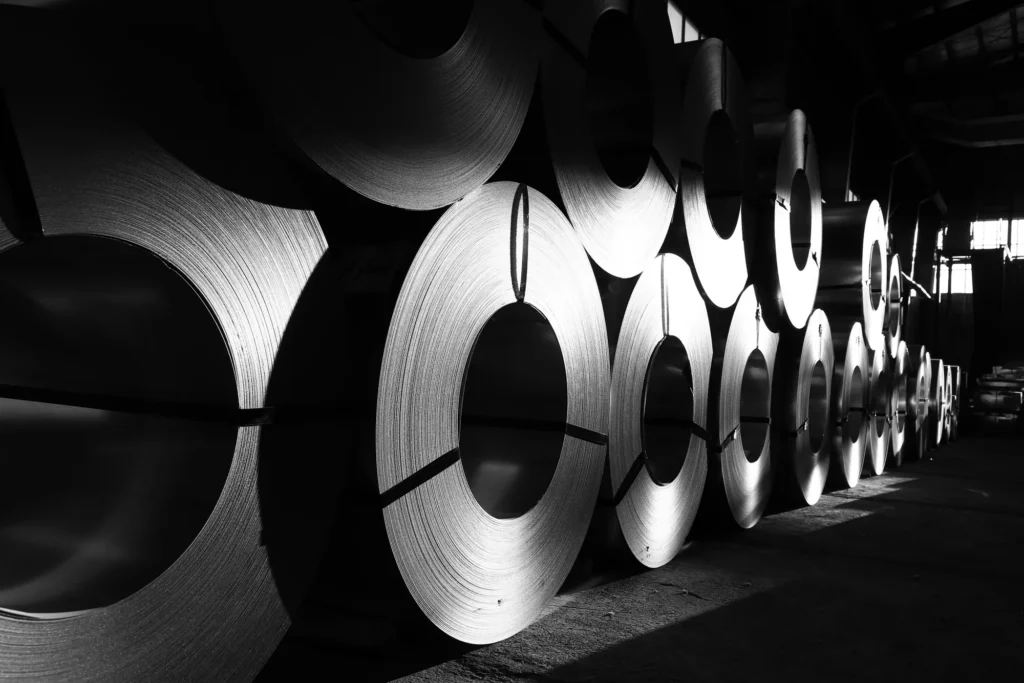
Felton MBC performs on-site Engineering Surveys for continuous galvanizing lines (CGL), cold mill finishing lines, hot dip galvanizing lines, aluminizing lines, and electrolytic cleaning lines with brush scrubber cleaning sections. Each survey includes a full line walkdown, consumable analysis, solution testing, and a written report with prioritized recommendations and return-on-investment calculations.
The symptoms come back because the root cause never gets fixed.
Cleaning section problems on a galvanizing line almost always trace back to the same small set of root causes. Mills that find them usually cut consumable costs, restore coating quality, and stabilize throughput in a single cycle.
Coating defects appear with no clear source.
Fish eyes, uncoated spots and an uneven finish show up on finished coil, and warranty claims climb with no obvious cause. The defect appears at the end of the line. The source is upstream in the cleaning section.
Brushes wear out early.
Brush life that should run nine months or more is down to three or four. The brush usually gets the blame. The cause is almost always filtration that lets soil recirculate, solution temperature drift, or spray headers working against each other.
Unplanned outages add up.
Equipment keeps tripping, failing, or forcing a line stop. Each event looks unrelated on its own. Together they usually point to the same mechanical and chemical issues in the cleaning section.
Operating knowledge leaves with retirements.
A veteran retires and the line keeps running. Nobody on the current team knows why the settings are where they are or what to change when something drifts, because it was never written down.
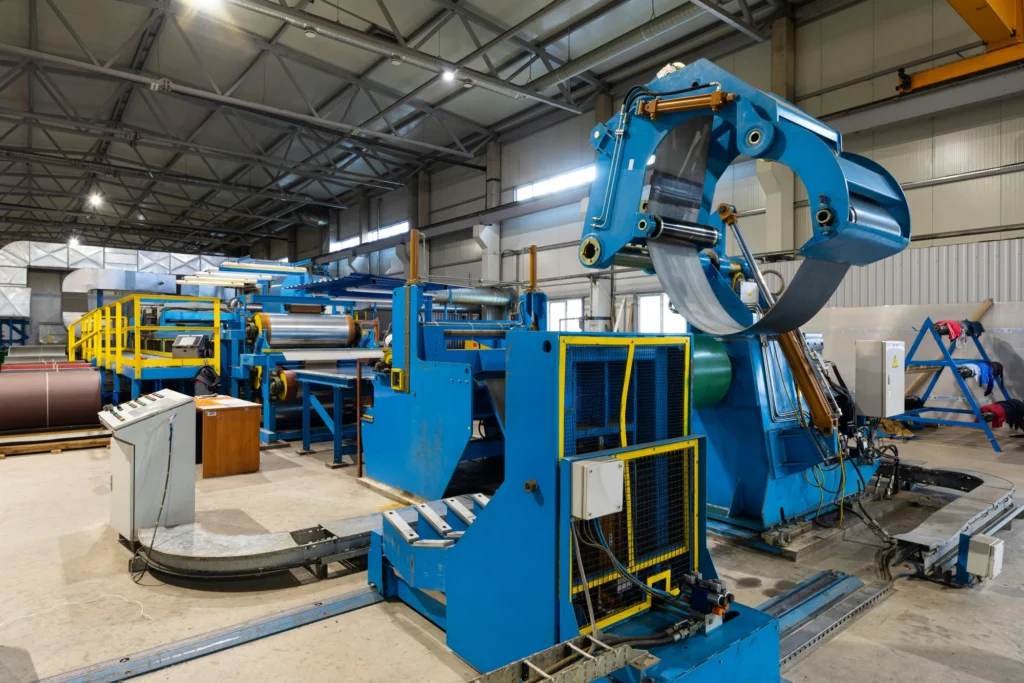
The survey is a complete diagnostic of the cleaning section.
Most mills call Felton MBC about one problem: coating defects, brushes wearing out too quickly, or outages that keep adding up. The symptoms look unrelated. They usually come from the same system.
Cleaning section problems almost always trace back to a small set of causes: filtration running below spec and letting soil recirculate, solution temperature out of range, spray headers misaligned or working against each other, backup rolls in the wrong position, or operating procedures that changed when a veteran retired and nothing was written down.
The Engineering Survey is that diagnostic. You get a report written for your line and your operating conditions. It tells you what to fix first and what each fix is worth.
The survey documents every section of the line.
Felton MBC senior steel mills engineer Jimmy Mitchell and the engineering team spend one to four days on your line, depending on complexity. The survey covers mechanical, chemical, and operational factors, because all three affect the same output.
On-Site Line Walkdown
The team observes every section from the pre-cleaner through the dryer, records current operating conditions, and interviews operators across shifts to learn how the line runs day to day.
Consumable & Solution Analysis
Caustic solution is sampled, soil load and iron fines are measured against target ranges, and filter media is inspected. Current brush filament condition is analyzed against the expected wear pattern for your line speed and strip metallurgy.
Mechanical Review
The review covers spray header positioning and flush cycles, brush footprint behavior at every position, backup roll alignment and pass line break, and filtration capacity and cleanout frequency. Everything that touches the strip gets measured.
Written Survey Report
Every finding is ranked by impact and tied to the specific problem it solves, supported by photos, measurements, and diagrams. The report separates short-term operational changes you can make immediately from long-term capital improvements for future planning.
How the engagement runs.
The full engagement typically runs three to five weeks from discovery call to delivered report. Implementation and audit follow on your timeline.
Discovery
We meet by video to review symptoms, line diagrams, and piping schematics before the team arrives on site.
On-Site Survey
The team spends one to four days on your line collecting samples, taking measurements, and interviewing operators across shifts.
Analysis & Report
We write the findings up as a report for your line, usually within two weeks.
Review & Plan
We walk through the report with your team. Recommendations are ranked by impact and sequenced by cost and constraints.
Implementation
We coordinate the engineering changes on site and deliver operator training where it is needed.
Ongoing Audit
Felton MBC returns to verify results against projected outcomes. Many mills schedule routine audits to maintain performance.
The deliverable is a written report that you own.
The report is confidential to your mill and written for your line. It is yours to act on whether or not you buy anything from Felton MBC.
- A written Engineering Survey report specific to your line
- Every finding documented with photos, measurements, and diagrams
- Short-term recommendations with no capital expense
- Long-term recommendations for capital planning
- A return-on-investment calculation for the full roadmap
- Direct access to the Felton MBC engineering team during implementation
- Optional ongoing line audits to verify and maintain results
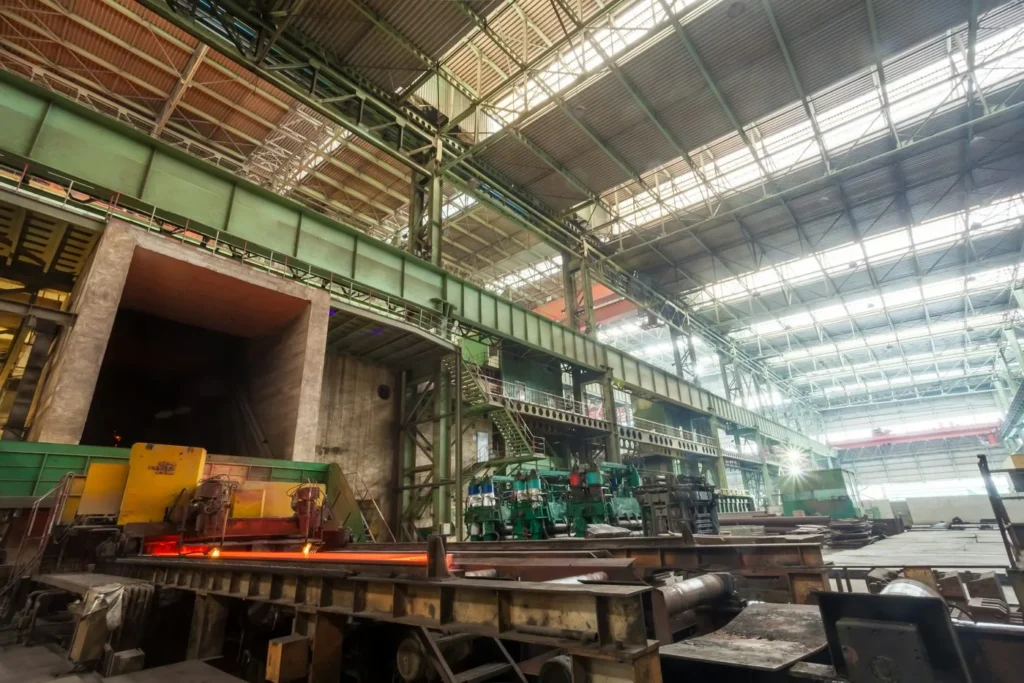
Results from three surveyed lines.
Every survey is confidential to the mill that commissioned it, so the case studies are anonymized by line type. Each card links to the full write-up.

Brush life and operator training
- Brush life increased from 3 months to 9 months
- Throughput improved 15%
- Shift-to-shift consistency restored across crews
Coating quality traced to solution temperature
- Brush life increased from 3-4 months to 12-15
- Fish eyes and uncoated spots reduced
- Downstream warranty claims decreased
Filtration and ROI analysis
- Thirteen-point improvement roadmap delivered
- Projected annual savings on caustic and water
- Waste treatment cost reductions quantified
Engineering Survey questions and answers.
What is a Felton MBC Engineering Survey?
Why do brushes wear out faster than expected on a galvanizing line?
What causes coating defects on a continuous galvanizing line?
How do I know if my cleaning section is the root cause of my coating problems?
How long does an Engineering Survey take?
Who performs the Engineering Survey?
What lines does Felton MBC survey?
Do we have to buy brushes from Felton MBC to get a survey?
What is included in the Engineering Survey report?
What is the return on investment for an Engineering Survey?
What happens after the Engineering Survey is delivered?
Can Felton MBC help with operator training?
Will the Engineering Survey report be shared with other customers?
How do we request an Engineering Survey?
Find out what is happening in your cleaning section.
Coating defects, brush wear, and unplanned downtime rarely have three separate causes. They usually share one. An Engineering Survey identifies it and tells you what fixing it is worth.